Number Fonts - Copy and Paste
𝟙𝟚𝟛 𝕔𝕠𝕡𝕪 & 𝕡𝕒𝕤𝕥𝕖 𝕗𝕒𝕟𝕔𝕪 𝕟𝕦𝕞𝕓𝕖𝕣𝕤
Transform your numbers into 80+ fancy font styles and browse 240+ number symbols — circled numbers ①②③, filled circles ❶❷❸, Roman numerals Ⅰ Ⅱ Ⅲ, fractions ½ ¼ ¾, superscript and subscript digits, and more. Click any symbol or styled number to copy, then paste anywhere!
Number Symbols
Circled Numbers
Filled Circled Numbers
Double Circled Numbers
Parenthesized Numbers
Period Numbers
Superscript Digits
Subscript Digits
Full-Width Digits
Digit 0
Digit 1
Digit 2
Digit 3
Digit 4
Digit 5
Digit 6
Digit 7
Digit 8
Digit 9
Fonts
Number Fonts - Copy and Paste in other languages
Browse other font text styles
FAST AND FREE
COPY AND PASTE YOUR TEXT IN 3 EASY STEPS
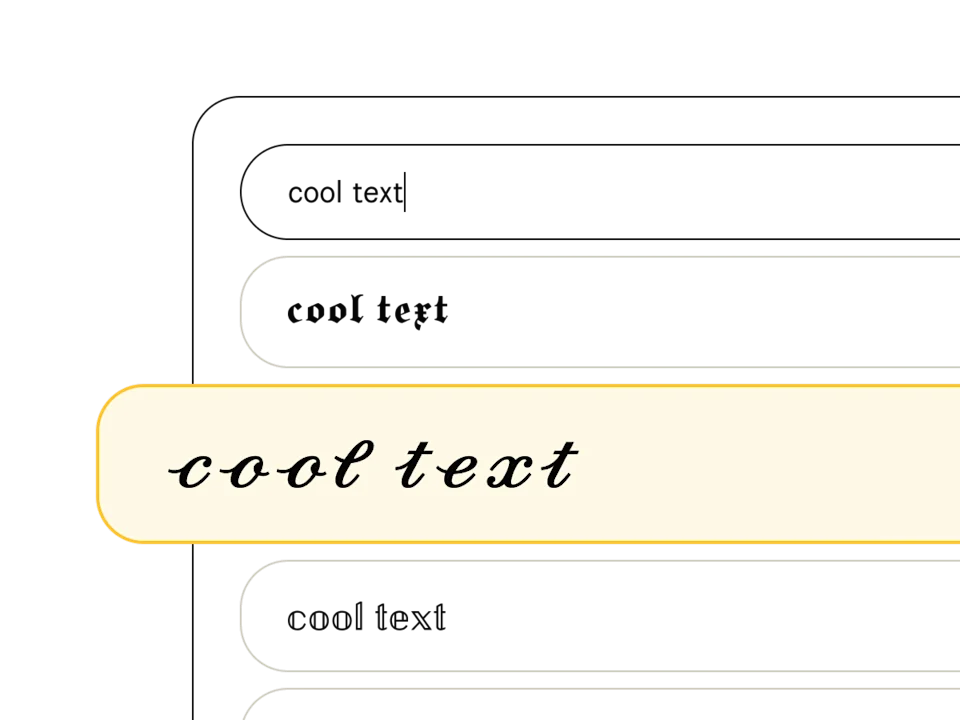
Pick a font style
Type your text in the font generator and peruse our list of 369+ text styles to find the perfect one. Fonts tagged with "Aa" include upper and lowercase, and those with a 🌐 support multiple languages.
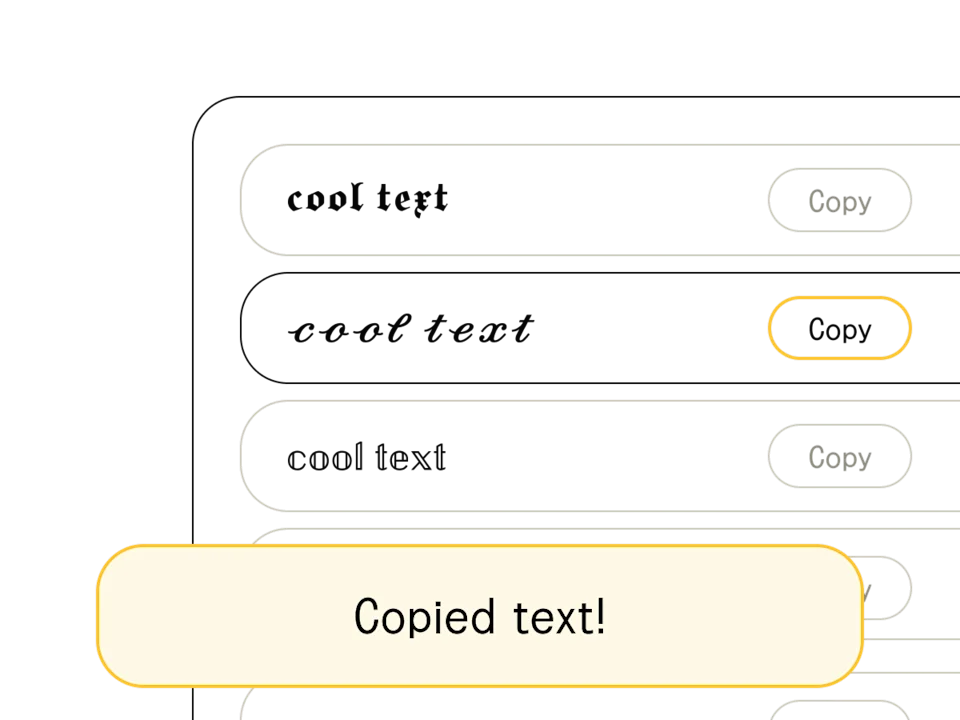
Copy/edit your text
Found your font? When you're happy with the output (and you've finished crafting your headline or message), hit the "copy" button to the right of your chosen text style. You can also select and Ctrl+C the text directly.
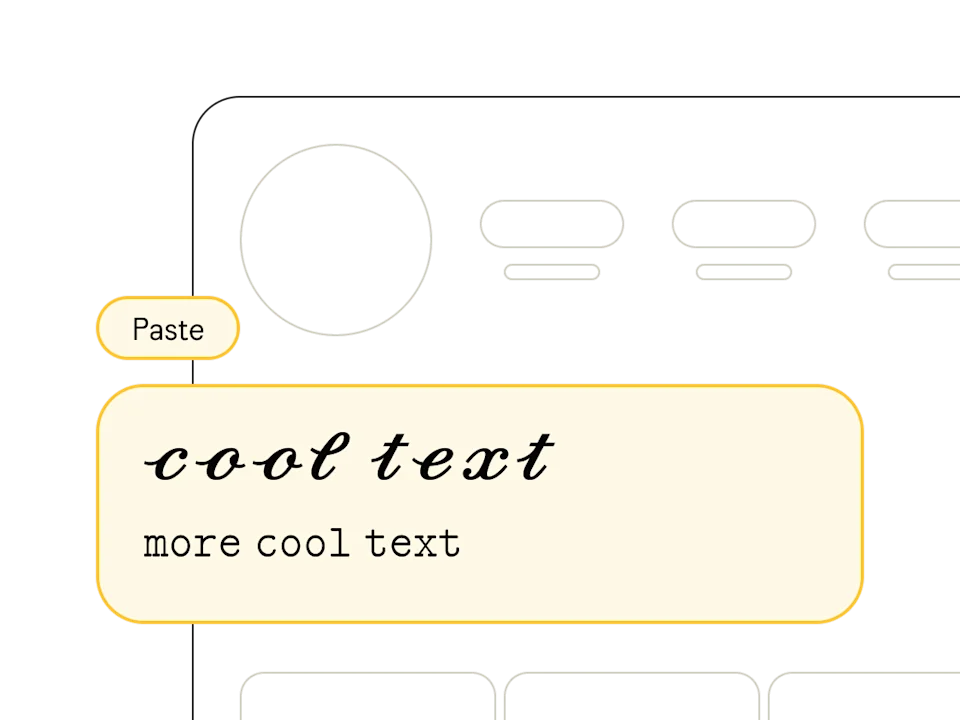
Paste anywhere
Once you've copied your text from our free online font generator, head on over to your social profile, design software, or messaging app and paste away! Pro tip: combine multiple styles to show off your design chops.
About Number Fonts
Number fonts aren't traditional typefaces you install — they're Unicode characters from specialized blocks like *Mathematical Alphanumeric Symbols* (U+1D400–U+1D7FF) and *Enclosed Alphanumerics* (U+2460–U+24FF). These characters were originally designed for mathematical notation and technical documents, but they've become popular as *fancy numbers* for social media, gaming, and creative projects.
Because these *number fonts* are built into the Unicode standard, they work everywhere regular text does — Instagram bios, WhatsApp messages, Discord usernames, tweets, and more. No app downloads or font installations required. Simply copy and paste your favorite *stylish numbers* wherever you want them to appear.
Number Font Styles Explained
- Bold (𝟏𝟐𝟑): Strong, heavy-weight numbers from the Mathematical Bold block — great for emphasis and headlines.
- Double-struck (𝟙𝟚𝟛): Hollow outline numbers also known as blackboard bold — popular in math notation and aesthetic bios.
- Circled (①②③): Numbers enclosed in circles from the Enclosed Alphanumerics block — perfect for numbered lists and step-by-step guides.
- Fullwidth (012): Wide-spaced numbers that take up the same width as CJK characters — commonly used in East Asian typography.
- Superscript (¹²³): Small raised numbers ideal for footnotes, ordinals, and mathematical expressions.
- Roman Numerals (Ⅰ Ⅱ Ⅲ): Classic Roman numeral characters — elegant for outlines, clocks, and formal designs.
- CJK Ideographic (一二三): Chinese/Japanese/Korean numeral characters — used in traditional and formal East Asian contexts.
Popular Uses for Fancy Numbers
- Instagram bios: Add stylish numbers to your follower milestones, birth year, or lucky numbers to make your profile stand out.
- Gaming nicknames: Use bold or double-struck numbers in your gamer tag for a unique look on Steam, Discord, and in-game names.
- Tattoo designs: Preview fancy number styles before committing to ink — Roman numerals and circled numbers are popular tattoo choices.
- WhatsApp status: Make your status updates more eye-catching with decorative numbers for dates, countdowns, or anniversaries.
- Numbered lists: Create visually distinct ordered lists using circled or bold numbers in posts, notes, and documents.
- Social media countdowns: Build excitement with stylish number countdowns for product launches, events, or milestone celebrations.
World Script Numerals
Beyond decorative and mathematical number styles, Typedly includes *world script numerals* — native digit characters from over 30 writing systems across Asia, the Middle East, and Africa. These are real Unicode characters built into the standard for scripts like Devanagari (०१२), Thai (๐๑๒), Arabic-Indic (٠١٢), Bengali (০১২), and many more. Copy and paste them anywhere — they work on all devices that support these scripts.
- Indic scripts: Devanagari (०१२), Bengali (০১২), Gurmukhi (੦੧੨), Gujarati (૦૧૨), Odia (୦୧୨), Tamil (௦௧௨), Telugu (౦౧౨), Kannada (೦೧೨), Malayalam (൦൧൨), and Sinhala (෦෧෨) — numerals from the major writing systems of South Asia.
- Arabic variants: Arabic-Indic (٠١٢) used across Arab countries, and Extended Arabic-Indic (۰۱۲) used in Iran, Pakistan, and Afghanistan.
- Southeast Asian: Thai (๐๑๒), Lao (໐໑໒), Myanmar (၀၁၂), Khmer (០១២), Balinese (᭐᭑᭒), Javanese (꧐꧑꧒), Sundanese (᮰᮱᮲), and Cham (꩐꩑꩒) — digits from the diverse writing systems of Southeast Asia.
- Central Asian: Tibetan (༠༡༢) and Mongolian (᠐᠑᠒) script numerals.
- Tai scripts: New Tai Lue (᧐᧑᧒), Tai Tham Hora (᪀᪁᪂), and Tai Tham Tham (᪐᪑᪒) digit characters.
- African scripts: NKo (߀߁߂) and Vai (꘠꘡꘢) — numerals from indigenous West African writing systems.
- Other scripts: Limbu (᥆᥇᥈), Lepcha (᱀᱁᱂), Ol Chiki (᱐᱑᱒), Meetei Mayek (꯰꯱꯲), and Saurashtra (꣐꣑꣒) — lesser-known but valid Unicode digit blocks. Rendering depends on your device's font support.
Combining Mark Number Styles
Combining marks are special Unicode characters that overlay or attach to any base character, including digits. Unlike standalone number fonts that replace digits entirely, *combining mark numbers* layer a visual effect — an underline, strikethrough, circle, or accent — directly onto the original 0-9 digits. The result is a decorated number that copies as two Unicode codepoints: the base digit plus the combining character.
- Underline (0̲1̲2̲): Combining Low Line (U+0332) draws a line beneath each digit — useful for emphasis, links, or highlighting important numbers in text.
- Double Underline (0̳1̳2̳): Combining Double Low Line (U+0333) adds a double underline for stronger visual emphasis — commonly used in accounting and formal notation.
- Overline (0̅1̅2̅): Combining Overline (U+0305) places a line above each digit — traditionally used in mathematics to denote repeating decimals like 0.̅3̅.
- Strikethrough (0̶1̶2̶): Combining Long Stroke Overlay (U+0336) crosses through each digit — ideal for showing corrections, deletions, or price reductions.
- Slash Through (0̸1̸2̸): Combining Long Solidus Overlay (U+0338) adds a diagonal slash — used in mathematics for “not equal” and similar negation operators.
- Enclosing Circle (0⃝1⃝2⃝): Combining Enclosing Circle (U+20DD) wraps each digit in a circle — great for numbered labels, bullet points, and decorative lists.
- Enclosing Square (0⃞1⃞2⃞): Combining Enclosing Square (U+20DE) frames each digit in a square — useful for icons, UI mockups, and keyboard key representations.
- Enclosing Diamond (0⃟1⃟2⃟): Combining Enclosing Diamond (U+20DF) places each digit inside a diamond shape — distinctive for decorative and gaming contexts.
- Dot Above (0̇1̇2̇): Combining Dot Above (U+0307) adds a small dot over each digit — a subtle accent for creative typography.
- Dot Below (0̣1̣2̣): Combining Dot Below (U+0323) places a dot underneath each digit — used in linguistic transcription and decorative text.
- Tilde (0̃1̃2̃): Combining Tilde (U+0303) adds a wavy mark above each digit — familiar from Spanish ñ and Portuguese, now applied to numbers.
- Circumflex (0̂1̂2̂): Combining Circumflex Accent (U+0302) places a caret above each digit — known from French and other European languages.
- Ring Above (0̊1̊2̊): Combining Ring Above (U+030A) adds a small ring on top — reminiscent of the Scandinavian å or a degree symbol.